









تلف عجلات ألياف الكربون: دليل شامل للوقاية والتحديد والإصلاح

تمثل عجلات ألياف الكربون قمة تكنولوجيا الأداء في عالم السيارات والدراجات، حيث تقدم نسب قوة إلى وزن استثنائية ومزايا إيروديناميكية. ومع ذلك، تتطلب هذه المكونات عالية الأداء معرفة متخصصة وعناية دقيقة لمنع التلف والحفاظ على الوظائف المثلى. إن فهم الأنواع المختلفة من التلف الذي يمكن أن يؤثر على عجلات ألياف الكربون، جنبًا إلى جنب مع استراتيجيات الوقاية والصيانة المناسبة، أمر ضروري لأي شخص يستثمر في هذه التكنولوجيا الفاخرة.
فهم تركيب عجلات ألياف الكربون

تستخدم عجلات ألياف الكربون هيكلًا من المواد المركبة يتكون من طبقات ألياف كربونية ملتصقة معًا براتنج الإيبوكسي. تخلق طريقة البناء هذه مكونات قوية بشكل لا يصدق في اتجاهات محددة مع بقائها خفيفة الوزن. تتضمن عملية التصنيع عادةً إما تقنية ألياف الكربون المسبقة التشريب (pre-preg) أو تقنيات التصفيف الرطب بالتفريغ الهوائي، حيث تقدم تقنية pre-preg خصائص قوة وتناسق فائقة.
الخصائص الفريدة لألياف الكربون تجعل هذه العجلات صلبة ومستجيبة بشكل استثنائي، ولكنها تخلق أيضًا نقاط ضعف محددة تختلف بشكل كبير عن العجلات الألومنيوم التقليدية. على عكس العجلات المعدنية التي عادةً ما تنحني أو تتشوه عند التلف، فمن المرجح أن تتشقق عجلات ألياف الكربون أو تتعرض للانفصال الطبقي عند تعرضها لإجهاد مفرط.
تدمج عجلات ألياف الكربون الحديثة أنظمة راتنج متقدمة وتقنيات تصنيع مصممة لتحسين المتانة ومقاومة الحرارة. يستخدم المصنعون ذوو الجودة طلاءات نهائية متخصصة توفر حماية من الأشعة فوق البنفسجية وتعزز مقاومة المادة للتدهور البيئي.
الأنواع الرئيسية لتلف عجلات ألياف الكربون
تلف الصدمات: التهديد الأكثر شيوعًا
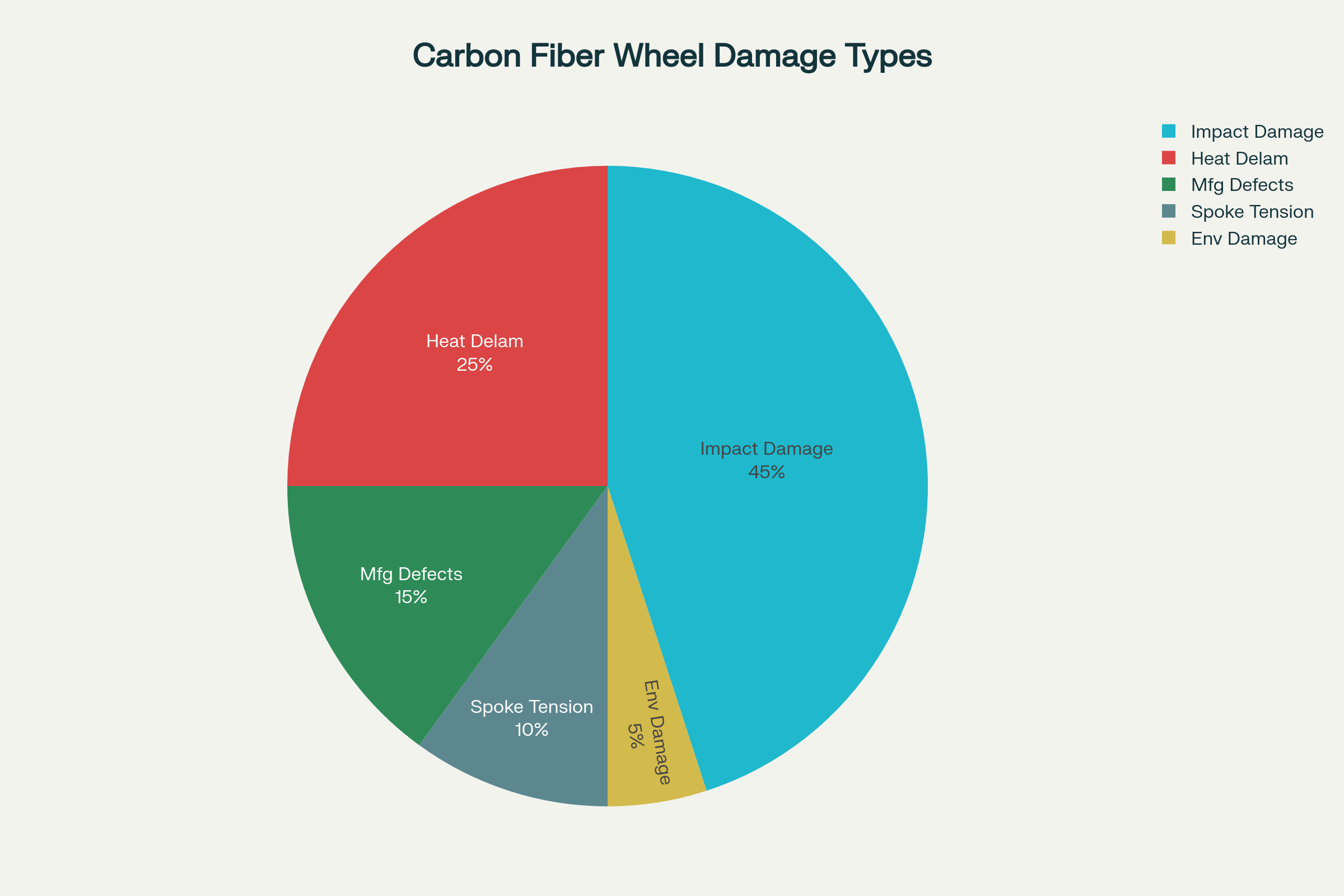
يمثل تلف الصدمات السبب الأكثر تكرارًا لفشل عجلات ألياف الكربون، حيث يمثل حوالي 45٪ من جميع حالات التلف. يحدث هذا النوع من التلف عندما تضرب العجلات المطبات، أو الأرصفة، أو الصخور، أو مخاطر الطريق الأخرى بسرعة. على عكس عجلات الألومنيوم التي قد تتشقق أو تنحني، فمن المرجح أن تتشقق عجلات ألياف الكربون أو تعاني من فشل كارثي عند تعرضها لصدمات حادة.
ينبع ضعف ألياف الكربون تجاه تلف الصدمات من هشاشة المادة مقارنة بالمعادن. بينما تتفوق ألياف الكربون في التعامل مع الأحمال الموزعة وتطبيق الإجهاد التدريجي، يمكن للقوى المركزة المفاجئة أن تتجاوز حدود المادة وتسبب التشقق أو الانفصال الطبقي. تعتبر صدمات المطبات خطيرة بشكل خاص لأنها تخلق نقاط إجهاد مركزة يمكن أن تبدأ انتشار التشقق في جميع أنحاء هيكل العجلة.
تؤثر عدة عوامل على شدة تلف الصدمات، بما في ذلك ضغط الإطارات، وسرعة العجلة، وزاوية الاصطدام. يزيد ضغط الإطارات المنخفض من خطر ضربات الحافة عن طريق تقليل الوسادة الواقية بين العجلة وسطح الطريق. تضخم الصدمات عالية السرعة القوى المعنية، مما يجعل حتى عيوب الطريق الطفيفة نسبيًا محتملة التلف.
الانفصال الطبقي الناتج عن الحرارة
يمثل التلف الحراري ثاني أكثر أشكال فشل عجلات ألياف الكربون شيوعًا، حيث يؤثر بشكل خاص على العجلات المجهزة بفرامل الحافة. يمكن للفرملة الممتدة أثناء النزول الطويل أن ترفع درجة حرارة الحافة فوق 150 درجة مئوية (300 فهرنهايت)، مما يخلق ظروفًا تضعف الواجهة بين الكربون والراتنج وقد تسبب الانفصال الطبقي.
يتضمن الفيزياء وراء التلف الحراري تحويل الطاقة الحركية إلى طاقة حرارية أثناء الفرملة. بينما تبدد عجلات الألومنيوم هذه الحرارة بشكل فعال عبر هيكلها، فإن الموصلية الحرارية الضعيفة لألياف الكربون تتسبب في تركيز الحرارة عند سطح الفرامل. يمكن لهذه الحرارة المركزة أن تليّن أو تتلف راتنج الإيبوكسي الذي يربط ألياف الكربون معًا، مما يؤدي إلى انفصال الطبقات أو الانفصال الطبقي.
غالبًا ما يظهر التلف الناتج عن الحرارة على شكل فقاعات، أو تغير في اللون، أو بقع لينة على سطح الفرامل. في الحالات الشديدة، يمكن أن يتشوه هيكل الحافة أو يفشل تمامًا، مما يخلق ظروف قيادة خطرة. يكون الخطر مرتفعًا بشكل خاص أثناء النزول الممتد حيث تولد الفرملة المستمرة تراكمًا مستمرًا للحرارة.
عيوب التصنيع وقضايا الجودة

يمكن لعيوب التصنيع، رغم أنها أقل شيوعًا بسبب تحسين عمليات مراقبة الجودة، أن تخلق نقاط ضعف خفية تؤدي إلى فشل مبكر. تحدث هذه العيوب عادةً أثناء عمليات التصفيف، أو المعالجة، أو التشطيب وقد لا تصبح واضحة حتى تتعرض العجلة للإجهاد أثناء الاستخدام.
تشمل عيوب التصنيع الشائعة التوزيع غير الكافي للراتنج، والتلوث بين الطبقات، ودرجات حرارة أو أوقات معالجة غير مناسبة، وضغط غير كافٍ أثناء عملية القولبة. يمكن أن تخلق هذه المشاكل فراغات، أو روابط ضعيفة بين الطبقات، أو مناطق ذات اختراق غير كافٍ للراتنج مما يضعف السلامة الهيكلية.
تسلط عمليات الاستدعاء الحديثة، مثل استدعاء عجلات DT Swiss الكربونية التي شملت أكثر من 6000 وحدة، الضوء على كيف يمكن لعيوب التصنيع أن تؤثر حتى على العلامات التجارية ذات السمعة الطيبة. عانت العجلات المستدعاة من انفصال طبقة الكربون الخارجية حول حافة الحافة، مما يوضح كيف يمكن لقضايا التصنيع الدقيقة أن تخلق مخاوف أمان كبيرة.
شد الأسلاك والمشكلات الهيكلية

يخلق شد الأسلاك غير المناسب فئة أخرى مهمة من تلف عجلات ألياف الكربون. يمكن للشد المفرط أن يضعف ثقوب الأسلاك ويسبب تشققًا حول هذه المناطق الحرجة، بينما يسمح الشد غير الكافي بمرونة العجلة التي يمكن أن تؤدي إلى فشل الإجهاد بمرور الوقت.
تتطلب عجلات ألياف الكربون شدًا دقيقًا للأسلاك للحفاظ على السلامة الهيكلية وخصائص الأداء. على عكس العجلات الفولاذية التي يمكنها تحمل بعض التباين في شد الأسلاك، تتطلب عجلات ألياف الكربون أنماط شد أكثر اتساقًا ومراقبة بعناية. يمكن للشد غير المتكافئ أن يخلق تركيزات إجهاد تبدأ في تكوين التشقق وانتشاره.
التحدي مع شد الأسلاك في عجلات ألياف الكربون هو أن المادة توفر علامات تحذيرية أقل قبل الفشل مقارنة بالعجلات المعدنية. بينما قد يتسبب سلك مفكوك في عجلة ألومنيوم في تمايل أو ضوضاء ملحوظة، يمكن لعجلات ألياف الكربون الحفاظ على وظيفتها الظاهرة حتى مع تطور المشكلات الهيكلية.
عوامل التلف البيئي والكيميائي
تساهم العوامل البيئية في تدهور عجلات ألياف الكربون من خلال آليات مختلفة. يمكن للأشعة فوق البنفسجية من ضوء الشمس أن تحلل مصفوفة الراتنج مع مرور الوقت، مما يؤدي إلى تدهور السطح وضعف هيكلي في النهاية. يخلق التناوب الحراري بين الظروف الساخنة والباردة إجهادات تمدد وانكماش يمكن أن تساهم في التقشر.
يمكن أن يؤدي التعرض للمواد الكيميائية من ملح الطرق أو منتجات التنظيف أو انسكابات الوقود أيضًا إلى إتلاف عجلات ألياف الكربون. يمكن للمواد الكيميائية القاسية أو عوامل التنظيف غير المناسبة مهاجمة مصفوفة الراتنج أو طلاء الورنيش الشفاف، مما يخلق مسارات لتسرب الرطوبة وتسريع التدهور.
يمثل تسرب الرطوبة شكلاً خبيثًا بشكل خاص من التلف البيئي. يمكن أن يؤدي اختراق الماء داخل هيكل ألياف الكربون إلى تلف التجميد والذوبان في المناخات الباردة ويمكن أن يتعارض مع سلامة رابطة الكربون-الراتنج. غالبًا ما يتطور هذا النوع من الضرر تدريجيًا وقد لا يصبح واضحًا حتى يحدث فشل هيكلي.
التقنيات المبكرة للكشف والتفتيش
يمثل التفتيش المنتظم الاستراتيجية الأكثر فعالية لتحديد تلف عجلات ألياف الكربون قبل أن يصبح خطيرًا. يجب إجراء الفحص البصري بعد كل رحلة، مع التركيز على المناطق الأكثر عرضة للتلف مثل فتحات الأسلاك (السبروكس)، وأسطح الفرامل، وحواف الجنط.
يوفر اخطر النقر طريقة بسيطة ولكنها فعالة لتحديد التلف الداخلي. تنتج العجلة السليمة رنينًا واضحًا ومتناسقًا عند النقر عليها برفق باستخدام عملة معدنية أو أداة بلاستيكية. قد تشير البقع الباهتة أو الميتة في الصوت إلى تقشر داخلي أو تكوين فراغات يضعف السلامة الهيكلية.
تشمل تقنيات التفتيش المتقدمة استخدام أضواء ساطعة لفحص هيكل العجلة بحثًا عن شقوق دقيقة أو أنماط تغير في اللون قد تشير إلى مشاكل متطورة. يمكن لخدمات التفتيش المحترفة استخدام الاختبارات فوق الصوتية أو طرق التقييم غير التدميرية الأخرى لتقييم الحالة الهيكلية الداخلية.
استراتيجيات الوقاية وأفضل الممارسات
يتطلب منع تلف عجلات ألياف الكربون نهجًا شاملاً يتناول آليات الفشل الأساسية. يمثل الحفاظ على ضغط الإطارات المناسب إحدى استراتيجيات الوقاية الأكثر فعالية، حيث يوفر الضغط الكافي وسادة تحمي العجلات من أضرار الصدمات.
يعد اختيار وسادات الفرامل المناسبة لعجلات ألياف الكربون أمرًا بالغ الأهمية لمنع التلف المرتبط بالحرارة. تم تصميم وسادات الفرامل المخصصة لألياف الكربون لإدارة تراكم الحرارة وتقديم أداء ثابت دون ارتفاع درجة حرارة سطح الجنط. تستخدم هذه الوسادات عادةً مركبات أكثر ليونة تبدد الحرارة بشكل أكثر فعالية من الوسادات القياسية المصممة للعجلات الألومنيوم.
تصبح تقنية الفرملة المناسبة أمرًا بالغ الأهمية عند استخدام عجلات ألياف الكربون مع فرامل الجنط. يسمح التخفيف التدريجي للفرامل أثناء النزول، بدلاً من تطبيق ضغط مستمر، بتشتيت الحرارة بين أحداث الكبح ويمنع تراكم درجات الحرارة الخطيرة.
تؤثر ممارسات التخزين والتعامل بشكل كبير على طول عمر عجلات ألياف الكربون. يجب تخزين العجلات في أماكن باردة وجافة بعيدًا عن أشعة الشمس المباشرة ومخاطر الصدمات المحتملة. عند نقل العجلات، تمنع الأكياس الواقية أو الحاويات التلف العرضي وتقلل من التعرض للعوامل البيئية الضارة.
جداول وإجراءات الصيانة
يعد إنشاء روتين صيانة منتظم أمرًا ضروريًا لطول عمر وأداء عجلات ألياف الكربون. يجب أن تشمل الصيانة اليومية الفحص البصري للتلف الواضح والتنظيف الأساسي لإزالة الملوثات المسببة للتآكل مثل غبار الفرامل وملح الطرق.
تشمل الصيانة الأسبوعية تنظيفًا أكثر شمولاً باستخدام المنظفات المناسبة وفحص أسطح الفرامل للتآكل أو التلف الحراري. يجب أن تشمل عمليات التفتيش الشهرية تقييم شد الأسلاك (السبروكس) وتقييم حالة محمل المحور.
يجب جدولة خدمات الصيانة الاحترافية سنويًا أو بعد تراكم مسافة كبيرة. يمكن لهذه الخدمات تحديد المشاكل المتطورة التي قد لا تكون واضحة أثناء عمليات التفتيش الروتينية وضمان بقاء جميع المكونات ضمن معايير التشغيل الآمنة.
تصبح الصيانة الموسمية مهمة بشكل خاص للعجلات المستخدمة في الظروف البيئية القاسية. يجب أن يشمل تحضير التخزين الشتوي تنظيفًا شاملًا وتفتيشًا وتطبيقًا للمعالجات الواقية لمنع التآكل والتلف البيئي خلال فترات التخزين.
خيارات الإصلاح والقيود
قدرات إصلاح عجلات ألياف الكربون محدودة بشكل كبير مقارنة بتلك الخاصة بالعجلات المعدنية. قد يكون التلف السطحي البسيط مثل الخدوش أو الرقائق الصغيرة في طلاء الورنيش الشفاف قابلاً للإصلاح من خلال خدمات إعادة التشطيب الاحترافية، لكن التلف الهيكلي يتطلب عادةً استبدال العجلة.
نادرًا ما يسمح تلف التقشر بالإصلاح الآمن، حيث أن الرابطة المضعفة بين طبقات الكربون تؤثر على السلامة الهيكلية العامة للعجلة. غالبًا ما يؤدي محاولة إصلاح المناطق المتقشرة إلى مزيد من الضرر ويخلق مخاطر سلامة تفوق أي وفورات محتملة في التكلفة.
يعد التقييم الاحترافي أمرًا بالغ الأهمية عند النظر في خيارات الإصلاح. يمكن للفنيين المؤهلين تقييم مدى الضرر وتحديد ما إذا كان الإصلاح ممكنًا أو ما إذا كان الاستبدال ضروريًا للتشغيل الآمن. تلغي العديد من الشركات المصنعة الضمانات إذا تمت محاولة الإصلاحات من قبل مقدمي خدمات غير مصرح لهم.
اختيار المنتجات والشركات المصنعة عالية الجودة
يقلل اختيار عجلات ألياف الكربون من الشركات المصنعة ذات السمعة الطيبة بشكل كبير من خطر العيوب والفشل المبكر. تستخدم الشركات المصنعة الراسخة عادةً عمليات مراقبة جودة صارمة وتستخدم مواد وتقنيات بناء مثبتة تعزز المتانة والموثوقية.
يقدم بناء ألياف الكربون المسبقة التشريب (Pre-preg) عمومًا أداءً ومتانة فائقة مقارنة بتقنيات التصفيف الرطب (wet layup). توفر مواد Pre-preg توزيعًا أكثر اتساقًا للراتنج وتحكمًا أفضل في عملية المعالجة، مما يؤدي إلى عجلات ذات خصائص أداء أكثر قابلية للتنبؤ وعمر خدمة أطول.
يجب أن يؤخذ في الاعتبار تغطية الضمان ودعم العملاء في قرارات الشراء. تقدم الشركات المصنعة ذات السمعة الطيبة عادةً ضمانات شاملة تحمي من عيوب التصنيع وتوفر إجراءات واضحة لمعالجة المشكلات إذا حدثت.
الاعتبارات الاقتصادية والتكلفة الإجمالية للملكية
تمتد التكلفة الإجمالية لملكية عجلات ألياف الكربون إلى ما هو أبعد من سعر الشراء الأولي لتشمل الصيانة والإصلاحات المحتملة وتكاليف الاستبدال. بينما تقدم عجلات ألياف الكربون مزايا أداء، فإن تكلفتها الأولية الأعلى وقابليتها المحدودة للإصلاح تخلق اعتبارات اقتصادية مختلفة مقارنة بمواد العجلات التقليدية.
تكتسي اعتبارات التأمين أهمية كبيرة لعجلات ألياف الكربون عالية القيمة، حيث يمكن أن تكون تكاليف الاستبدال كبيرة. قد لا توفر بعض بوالص التأمين تغطية كافية للعجلات المعدلة بعد البيع، مما يجعل التغطية المنفصلة أو التقييمات الموثقة أمرًا مهمًا لحماية الاستثمار.
تعتمد قيمة إعادة بيع عجلات ألياف الكربون بشكل كبير على الحالة وسجل الصيانة. تحتفظ العجلات المُصانة جيدًا من الشركات المصنعة ذات السمعة الطيبة بقيمتها عادةً أفضل من تلك التي تظهر عليها علامات التلف أو الإهمال، مما يجعل العناية السليمة اعتبارًا اقتصاديًا مهمًا.
التطورات المستقبلية والتقدم التكنولوجي
تستمر تكنولوجيا عجلات ألياف الكربون في التطور مع تحسينات في المواد وعمليات التصنيع وتحسين التصميم. تقدم أنظمة الراتنج المتقدمة مقاومة أفضل للحرارة والمتانة، بينما تقلل تقنيات التصنيع المحسنة من خطر العيوب وتعزز الاتساق.
قد تقدم طرق البناء الهجينة التي تجمع بين ألياف الكربون ومواد أخرى مقاومة محسنة للصدمات مع الحفاظ على مزايا الوزن والأداء. يمكن أن تعالج هذه الأساليب بعض القيود الحالية للبناء من ألياف الكربون النقي.
قد توفر تقنيات المراقبة والتشخيص في النهاية ملاحظات في الوقت الفعلي حول حالة العجلة ومستويات الإجهاد. يمكن لمثل هذه الأنظمة التحذير من المشاكل الناشئة قبل أن تصبح خطيرة وتحسين جداول الصيانة بناءً على أنماط الاستخدام الفعلية.
الخلاصة
تقدم تكنولوجيا عجلات ألياف الكربون فوائد أداء استثنائية للتطبيقات السيارات والدراجات، ولكنها تتطلب معرفة متخصصة وعناية لتحقيق هذه المزايا بأمان واقتصاد. إن فهم آليات التلف المختلفة، وتنفيذ استراتيجيات الوقاية المناسبة، والحفاظ على جداول فحص منتظمة، كلها أمور أساسية لتعظيم قيمة ومأمونية هذه المكونات المتميزة.
يكمن مفتاح امتلاك عجلات ألياف الكربون بنجاح في الاعتراف بأن هذه المكونات تتصرف بشكل مختلف عن المواد التقليدية وتتطلب ممارسات صيانة وتداول متكيفة. بينما قد يكون الاستثمار الأولي ومتطلبات العناية المستمرة أعلى من العجلات التقليدية، فإن مزايا الأداء والتطور التكنولوجي لعجلات ألياف الكربون تستمر في جعلها جذابة للهواة الجادين والمحترفين.
باتباع أفضل الممارسات الراسخة، واختيار منتجات عالية الجودة من الشركات المصنعة ذات السمعة الطيبة، والحفاظ على روتين يقظ للفحص والصيانة، يمكن لأصحاب عجلات ألياف الكربون الاستمتاع بمزايا هذه التكنولوجيا المتقدمة مع تقليل مخاطر التلف والفشل المبكر إلى الحد الأدنى. مع استمرار تقدم التكنولوجيا، من المرجح أن تصبح عجلات ألياف الكربون أكثر متانة وإتاحة، لكن المبادئ الأساسية للعناية والصيانة السليمة ستظل ضرورية للتشغيل الآمن والناجح.